
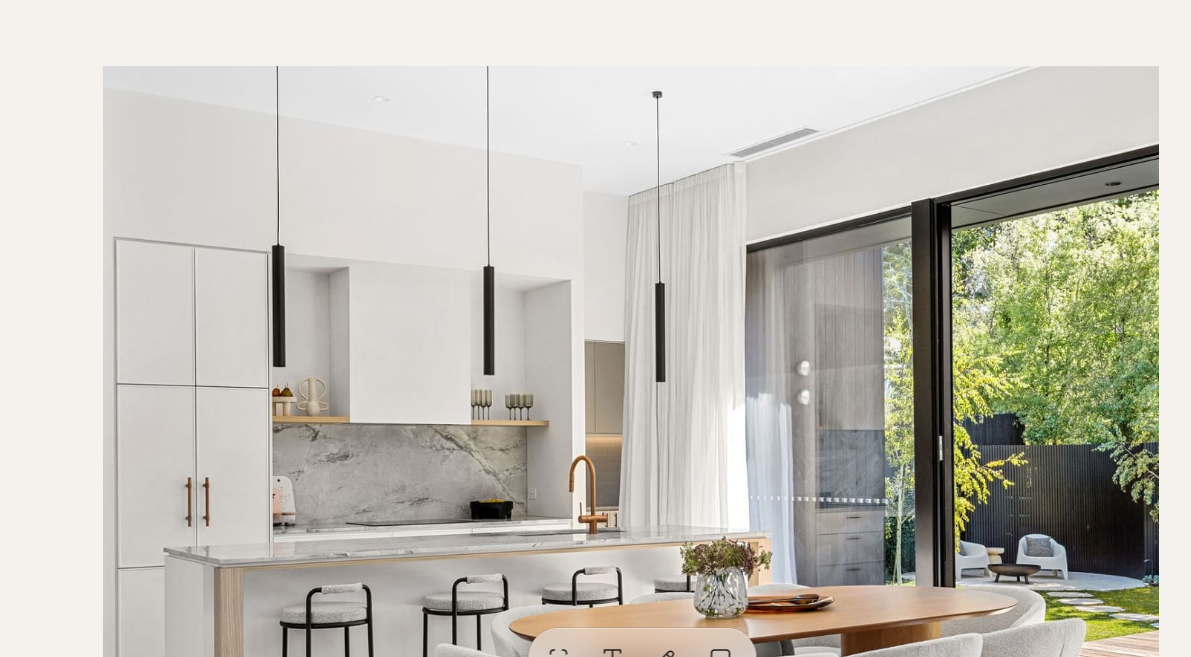
Many people picture hiring an interior designer as clearing a room out and starting from nothing. It's one of the quieter concerns we hear from prospective clients across the Mornington Peninsula and bayside Melbourne: the sideboard that's been in the family for years, the artwork picked up on a trip overseas, the sofa that's exactly the right shape for how the household actually lives. Nobody wants to lose the pieces that matter to them, and the reassuring answer is that they usually don't have to.
Working with furniture you already own isn't a workaround we accommodate reluctantly, it's built into how the design process starts. Here's what that actually looks like, and how we decide what stays, what changes, and what's better let go.
Integration is part of the service, not an exception
Interior Styling & Furniture is designed for exactly this situation: a space that doesn't need structural change, where the goal is making everything in it work together. We work with new or existing spaces, and we can integrate furniture you already own into a more cohesive design rather than defaulting to an all-new scheme. If you're weighing up whether this service or Full-Scope Interior Design suits your project, that distinction is worth reading first.
How we work out what stays
This conversation happens early, usually during your On-Site Design & Planning Review, when our Lead Designer walks through your home in person. We look at each piece you want to keep and talk through why it matters to you, whether sentimentally, for its quality, or simply because it already works well in the space. Pieces that are well made and reasonably timeless tend to earn a place in the new design more easily than anything trend-driven, regardless of age. It's a genuine conversation rather than a checklist, because the reasons a piece matters to you often shape how we design around it.
What tends to change around a kept piece
More often than replacing a piece outright, the work is in recontextualising it. A sofa might stay exactly as it is, but sit against a different wall colour, under new lighting, or alongside a rug and cushions chosen specifically to shift how it reads in the room. Reupholstery or refinishing can also extend the life of a genuinely good piece rather than retiring it, particularly for solid timber furniture or anything with good bones under a dated fabric. The furniture itself often isn't the problem, it's usually everything around it that needs adjusting.
When a piece doesn't make the cut
Occasionally something doesn't fit the brief, whether that's scale that no longer suits a reworked layout, condition that's beyond a reasonable repair, or a style that sits in real tension with everything else in the room. When that happens, we say so directly and explain why, rather than quietly designing around it. An honest conversation here protects the cohesion of the finished space, and it's always your call what happens next.
This applies beyond styling projects too
Even within Full-Scope Interior Design, where layout and structure are changing, treasured furniture often shapes the brief from day one. A piece you're committed to keeping can inform colour palettes, material selections and even joinery detail, so that once construction is complete, it reads as an intentional part of the design rather than something left over from before the renovation.
Common questions about designing around existing furniture
Will I need to get rid of most of what I own? No. Most clients keep more than they expect. The conversation is about which pieces to build the new design around, not how much to clear out.
Does keeping furniture reduce the cost of a styling project? Not as a fixed rule. Scope reflects the actual work involved, and every project is different, so we talk through how we think about interior design costs here rather than offering a general estimate.
What if I love a piece but it clashes with everything else? That's exactly what the On-Site Design & Planning Review is for, working out whether recontextualising solves it, or whether it's honestly time to let the piece go.
The coastal factor
Homes across Mornington, Mount Eliza and further down the Peninsula bring their own considerations to existing furniture. Sea air and coastal light can fade fabrics and affect timber finishes over time in ways that aren't always obvious at first glance, so part of assessing a kept piece is understanding its condition honestly, not just its appearance in the room. A piece that's held up well in an inland home isn't always in the same condition after years near the coast, and that's worth factoring in before deciding what to keep as is.
What happens next
Every project, whether it starts with a room full of furniture you love or an empty space, begins the same way: an Initial Design Call with our Lead Designer. From there, we typically recommend an On-Site Design & Planning Review, where we look at your space, including everything already in it, and work out what belongs in the finished design. Still deciding whether a designer is the right move at all? We've covered that separately, and our FAQ page covers more of the questions we hear often.