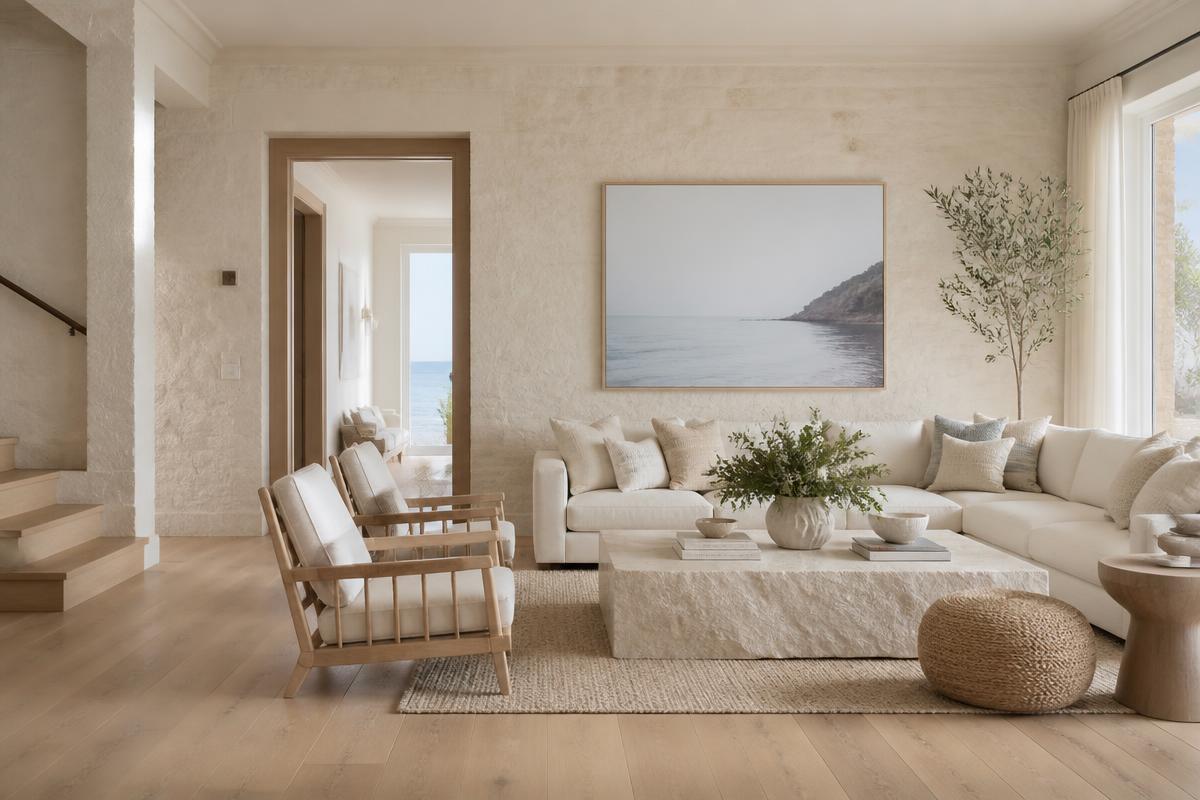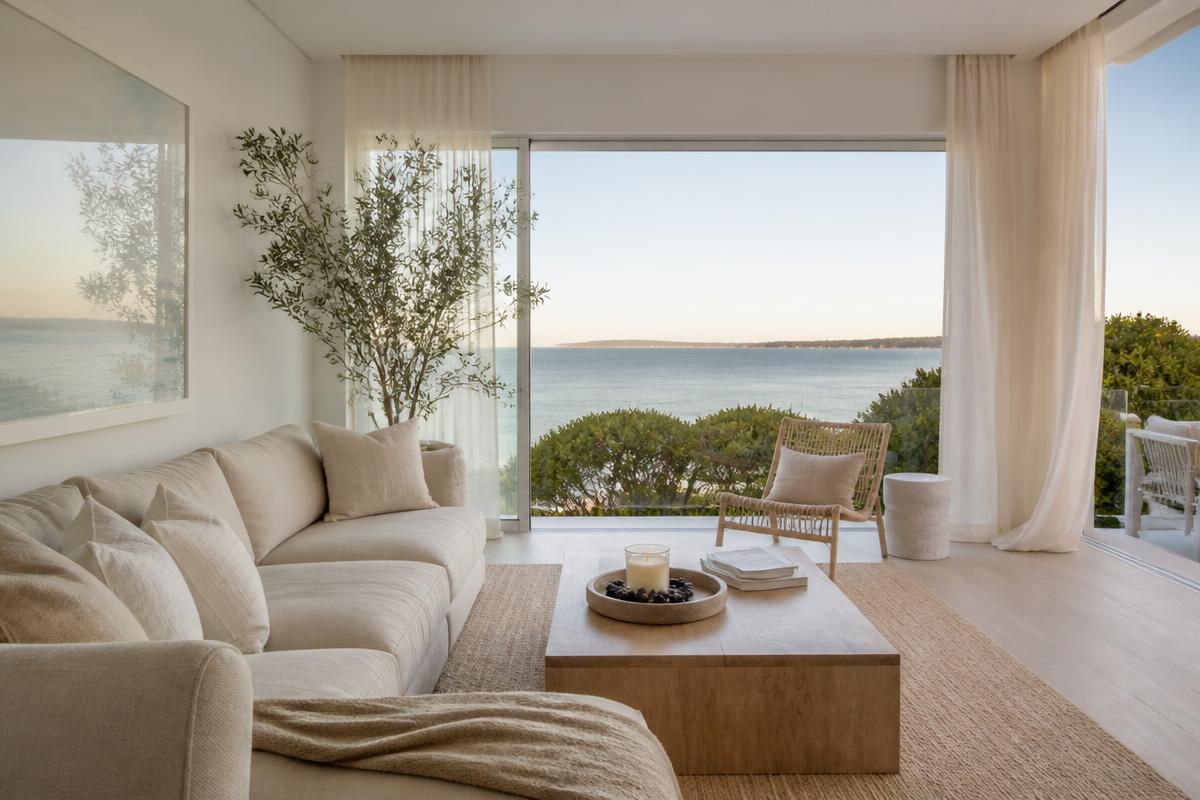
"Coastal" gets used as a shorthand for a look: white walls, blue accents, a rope-wrapped mirror near the front door. On the Mornington Peninsula, that's not really what the word means to us. Coastal interior design here is less about a palette you can copy and more about real conditions, light, air, and the way people actually live near the water, that shape most decisions before a fabric swatch is chosen.
Here's what genuinely changes when a project is designed for this stretch of coastline, rather than just decorated to look like it belongs there.
It starts with the light
Coastal light on the Peninsula is brighter and more reflective than inland light, bouncing off the bay and back into a room through the day in a way that changes how colours read. A paint colour that looks warm and grounded in a Melbourne showroom can turn cooler and flatter once it's in a room facing the water. Orientation matters too: a north-facing living space with bay glare through the afternoon needs a different approach to window treatments and finishes than a home tucked into a sheltered street. Getting this right means testing selections in the actual room at the actual time of day, not trusting a swatch alone.
Material choices earn their place
Salt air and humidity are harder on interiors than most people expect, and it shows up over time rather than immediately. Timbers not suited to coastal humidity can move and warp within a few seasons. Metal fixtures and hardware corrode faster this close to the water if they're not specified correctly. Fabrics chosen without UV and moisture resistance in mind fade well ahead of schedule, especially near large glazing that floods a room with light most of the day. None of this means avoiding beautiful materials, it means specifying them properly, the right timber treatments, fabric performance ratings and hardware finishes, chosen before installation rather than replaced after the fact.
The lifestyle shapes the floor plan
Coastal living on the Peninsula tends to mean more movement between inside and outside, more entertaining, and more forgiving surfaces for sand, wet swimmers and bare feet. That has real implications for a floor plan and material palette, not just a mood board. Flooring that handles moisture near a back door, upholstery that cleans easily after a day at the beach, and a kitchen that works as hard for a casual barbecue as a dinner party all come from understanding how a family actually uses the home.
Coastal doesn't mean one look
One of the most common misconceptions is that coastal design across the Peninsula looks the same everywhere. It doesn't. In Sorrento, classic limestone homes and Hamptons-inspired residences sit alongside architecturally designed retreats, shaped by a mild bay climate and a walkable village setting. Mornington combines marina living with modern family homes and sophisticated coastal detailing, closer to the energy of a working town centre. Mount Eliza leans toward established, leafy prestige, grand traditional homes and luxury rebuilds set back from the water rather than facing it directly. Further around the bay in Brighton, grand period homes and contemporary builds share a similarly refined, bayside atmosphere with its own architectural history. The conditions are coastal in every case, the right design response to them isn't.
Why local experience matters
Knowing how a specific street sits in relation to the water, which suburbs face more direct salt exposure, and how a home's orientation will behave across a Peninsula summer isn't something a generic style guide can tell you. It comes from working across these suburbs directly, project after project, whether a project is a full renovation or simply Interior Styling & Furniture for a home whose bones are already right.
Common questions about coastal interior design
Does coastal design cost more because of the material requirements? Not inherently. Specifying the right material for the conditions is about choosing correctly, not necessarily choosing something more expensive. Scope and finish level drive cost far more than the coastal factor alone, and every project gets a tailored proposal rather than a generic estimate.
Can I still get the style I want if it's not the classic "coastal" look? Yes. Coastal conditions inform material choices and durability, not the aesthetic itself. A home can be designed in a contemporary, classic or Hamptons-inspired style and still be properly suited to its environment.
Do I need to mention I'm near the water when I first get in touch? It helps, but it's not essential. Location, orientation and exposure are exactly what we walk through during the On-Site Design & Planning Review, alongside your broader goals for the space.
What happens next
Whether your project is a full renovation, a new build, or simply refreshing the furniture and styling in a home whose layout already works, understanding the coastal conditions it sits within is part of getting the design right from the start. If you're weighing up how much of your project actually needs a full design service, we've covered interior styling versus full-scope interior design separately, and if you already own pieces you love, here's how we work with what you already have.
Every project starts the same way: an Initial Design Call with our Lead Designer, followed by an On-Site Design & Planning Review at your property. Our FAQ page covers more of the questions we hear often, or you can get in touch directly to start the conversation.