
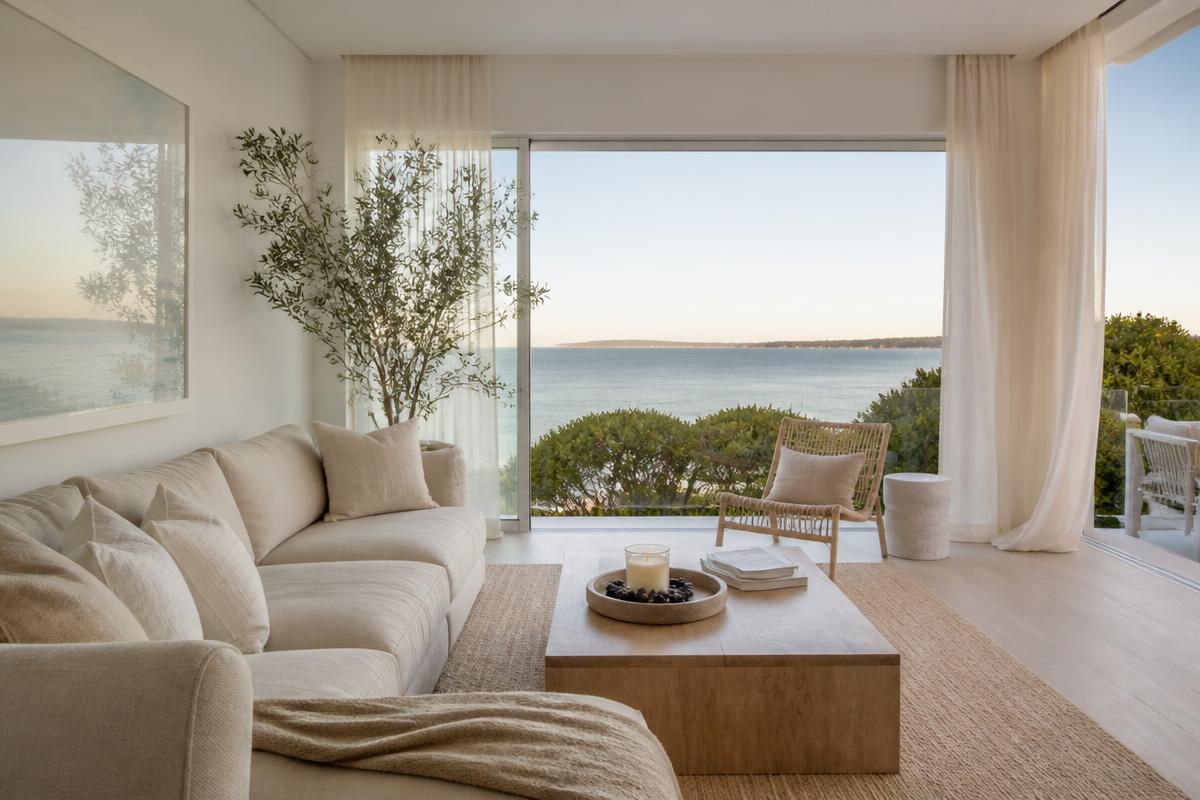
A holiday home on the Mornington Peninsula is often the house people care about most and live in least. It's where summers happen, where extended family gathers, and where the pace slows. It's also a different design problem from the home you live in every day, and treating it the same way is a common reason a holiday house ends up feeling either too precious to use or too tired to enjoy.
Here's how we think about the difference, and what changes when you work with an interior designer on the Mornington Peninsula for a holiday home rather than a permanent one.
Who the house is really for
An everyday home is designed around a fairly settled household. A holiday home usually isn't. One weekend it's two people, the next it's three generations, a few friends and the dog. Some owners also let the house out between their own stays.
That changes the brief from the start. Instead of asking how one family lives, we ask how the house needs to stretch: how many people it should sleep comfortably on its busiest weekend, where everyone eats together, where wet towels and sandy shoes go, and which spaces need to stay private when the house is full. Those answers shape the floor plan and joinery long before anyone talks about cushions.
Durability ahead of delicacy
In a permanent home, you can choose a finish knowing you'll look after it every day. A holiday home is often closed up for weeks, then used hard for a fortnight. Sand, salt air, damp swimwear and a steady stream of guests are part of the deal.
So material choices lean towards finishes that forgive: hard-wearing benchtops, flooring that copes with sand underfoot, performance fabrics on the pieces people actually sit on, and hardware chosen with salt air in mind. We cover the coastal side of this in more detail in What Makes Coastal Interior Design Different on the Mornington Peninsula. None of this means the house has to look utilitarian. It means the beautiful pieces go where they'll be enjoyed rather than worn out.
Storage that works when you're not there
Everyday homes need storage for daily life. Holiday homes need storage for arrivals and departures: linen for a full house, beach gear, outdoor cushions that come inside for winter and, if the house is let, a lockable owner's cupboard for personal belongings.
Built-in joinery is usually the answer, and it's far easier to plan before construction than to add later. On a renovation or new build, this is where Full-Scope Interior Design earns its place, because joinery is designed and documented alongside the build rather than squeezed in afterwards.
A different idea of "finished"
Many owners are happy for their everyday home to evolve over years, adding pieces as they find them. A holiday home is often the opposite. People want to arrive and find it complete: beds ready, lighting resolved, art hung, nothing left on the list.
That makes Interior Styling & Furniture a common fit where the layout already works, with furniture, lighting, window treatments, soft furnishings and artwork sourced as one coordinated package. If there are pieces you'd like to bring from home or keep from the existing house, we can work them into the design. Where the layout itself doesn't suit how the house is used, styling alone won't fix it, and that's worth knowing early.
Managing a project from a distance
Many holiday home owners don't live locally, so they can't drop past the site each week. Our studio is in Mornington, and we regularly travel down the Peninsula for site visits, measures, installations and styling days. On larger projects, Full-Scope includes working alongside your builder and other consultants, so decisions keep moving when you can't be there.
If your project also involves architects, building designers or a town planner, our post on whether you need your own architect or town planner explains who does what and how we work alongside them.
How it differs across the Peninsula
Holiday homes on the Peninsula aren't one style. In Sorrento, the mix runs from classic limestone homes to Hamptons-inspired residences and architecturally designed coastal retreats, often within a walk of the village. In Portsea, it's more likely to be a cliff-top home or a beach compound built around indoor-outdoor living and long summer entertaining.
Common questions about holiday home interior design
Should a holiday home be designed differently if I plan to rent it out? Usually, yes. Durability, easy maintenance, generous storage and a lockable owner's space matter more. Raise it early so it shapes the brief.
Can you furnish a holiday home that's already built? Yes. Interior Styling & Furniture works with new or existing spaces.
How much does it cost to design a holiday home? It depends entirely on scope, so we don't quote a figure before seeing the property. We explain how we think about interior design costs here, and the exact figure comes from a tailored proposal.
Do I need to be there for every stage? No. The On-Site Design & Planning Review happens at the property, and we meet with you at the end of each design stage to review the details. We can talk through what level of involvement suits you on the Initial Design Call.
What happens next
Every project, holiday home or everyday home, starts with an Initial Design Call with our Lead Designer. From there, the On-Site Design & Planning Review gives you clear direction on your space, followed by a tailored proposal. Our FAQ page covers more common questions, or you can get in touch to start the conversation.